
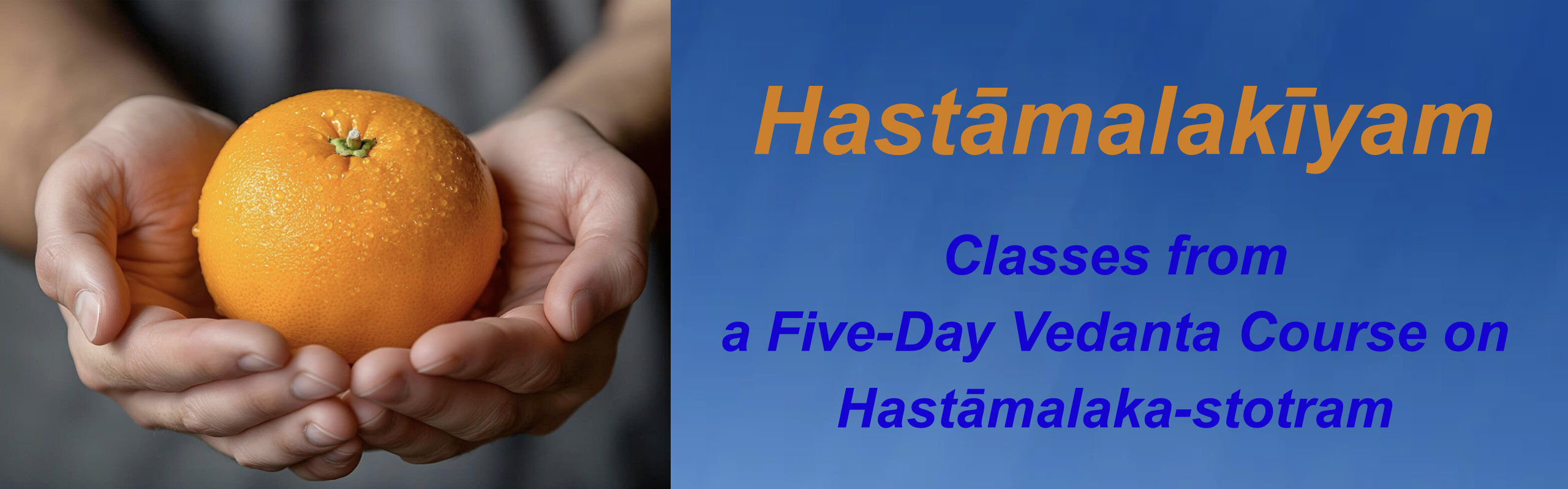
Hastamalakīyam is a work of twelve meditative verses written by one of Ādi Śaṅkarācārya’s four primary disciples. These profound verses are said to be a young boy’s response to Śaṅkarācārya’s question “Who are you?” upon their first meeting. The reply revealed that the nature of the self as unfolded in the Upaniṣads was indeed the boy’s own living reality. He was therefore given the name Hastāmalaka, meaning one whose vision of the truth is seen as clearly as a piece of fruit in the palm of one’s hand. This vision shines clearly through these verses.
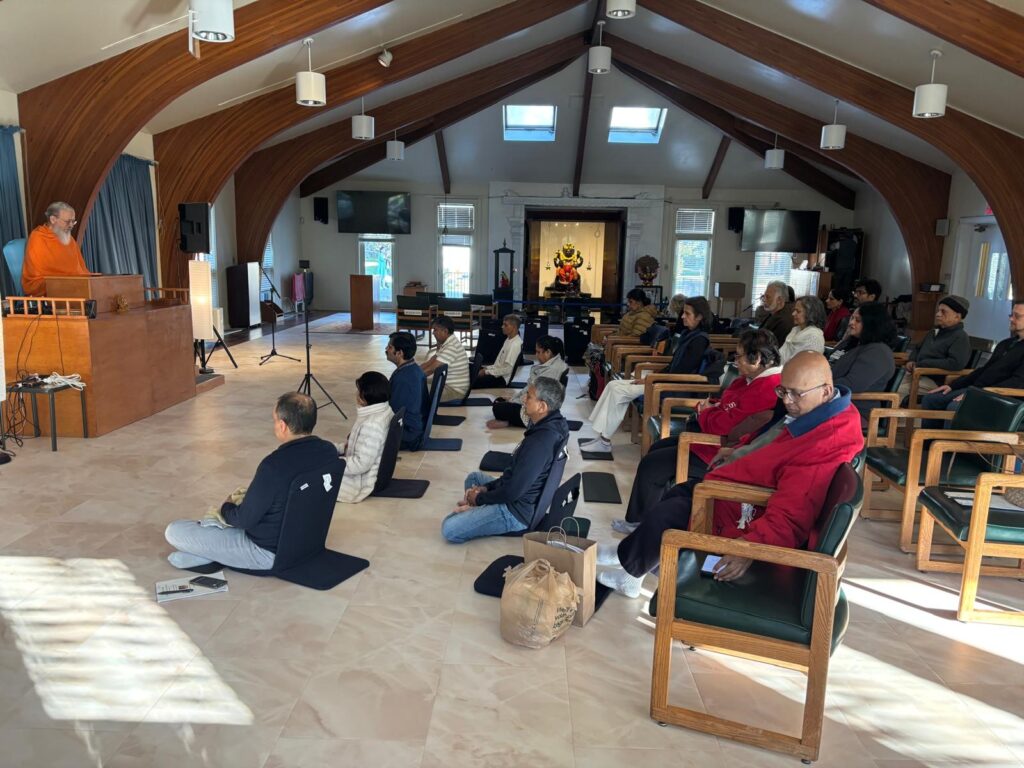
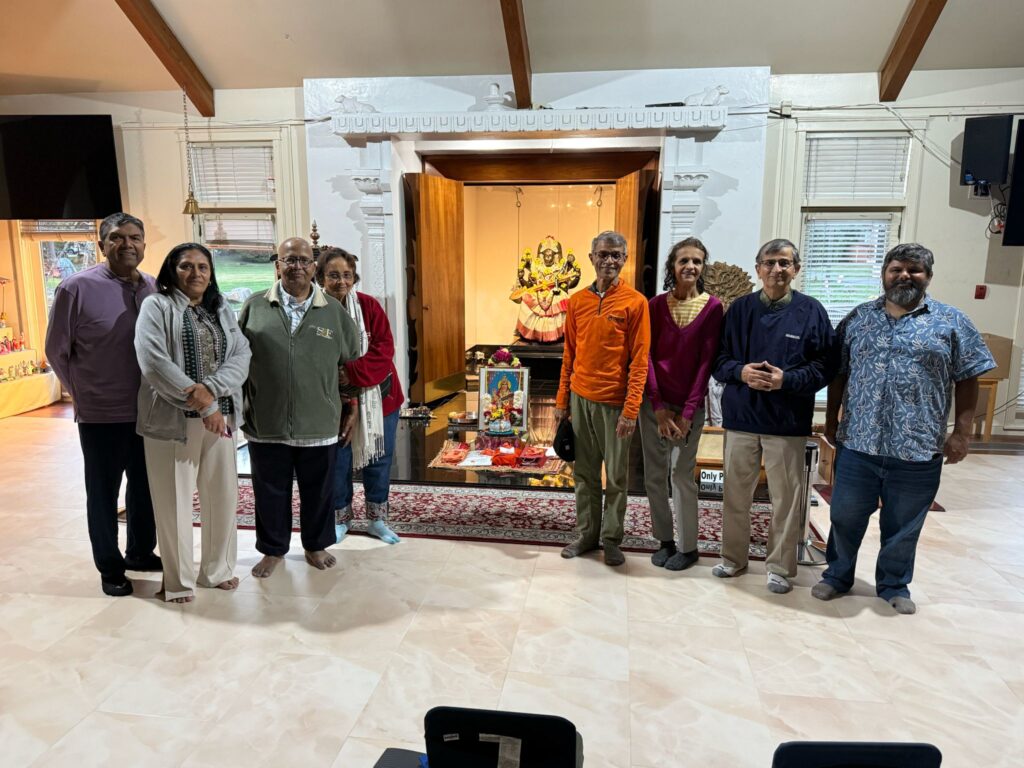
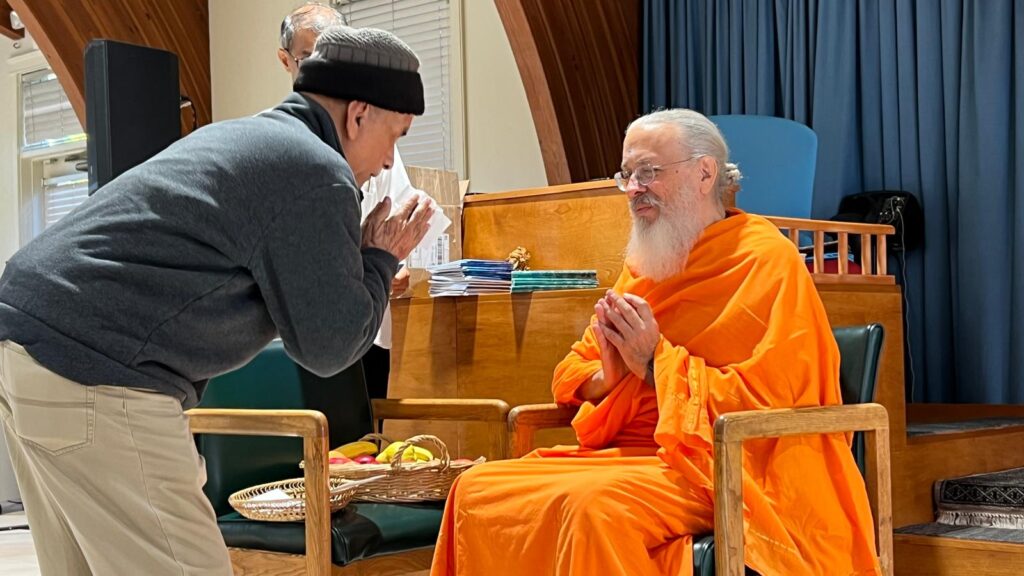
In October 2025, Swamiji had conducted a Five-Day Vedānta Course on this profound text in the beautiful setting of Arsha Vidya Gurukulam, Saylorsburg. To view the classes and guided meditations from the course, as well as download the text, please follow the links below.
YouTube Playlist of Video Classes
Download Hastāmalakīyam Retreat Handout
Student Reflections and Experiences from the Course
The Hastāmalakīyam, literally “as clear as a fruit in one’s palm”, is among the most concise and luminous texts of Advaita Vedānta. Śrī Śaṅkara is said to have met a silent boy who, when asked “Who are you?”, responded with twelve verses expressing perfect enlightenment. Recognizing the spontaneous clarity of realization, Śaṅkara named him Hastāmalaka and composed a commentary on his verses. The text stands as a direct expression of Self-knowledge, immediate and self-evident, not through reasoning but through direct recognition.
Essence of the Teaching
Swami Advayatmananda unfolded these verses with characteristic humor, clarity, and depth – blending Sanskrit analysis, scriptural reference, and practical Vedāntic guidance. The emphasis throughout was on the classical process of śravaṇa, manana, and nididhyāsana – listening, reflection, and contemplation – as the means to Self-recognition.
Swamiji highlighted viveka (discriminative inquiry) and śraddhā—not as blind belief but as “scripture-based trusting inquisitiveness.” The inquiry “Who am I?” is not philosophical speculation but the most intimate investigation into the meaning of “I.” The Self (Ātman) is not the body, mind, or roles, but pure, ever-present Awareness – unchanging, self-luminous, and free from birth and death. Bondage arises only from adhyāsa, the mistaken superimposition of the non-Self on the Self. Liberation (mokṣa) is therefore not a change of condition but the cognitive removal of this error.
Analogies and Insights
Two traditional analogies illuminated the vision:
- Reflection Analogy: Just as one sun appears reflected in many pots of water, the single Awareness seems to appear as many individual minds (jīvas). The reflections differ, but the sun remains one.
- Pot-Space Analogy: Space appears divided by pots but is never truly divided. Likewise, Consciousness seems manifold through countless bodies and minds but remains ever one and undivided.
Swamiji also clarified the distinction between satya (that which is absolutely real) and mithyā (that which is dependently real). The world and individuality are mithyā – empirically experienced but ultimately dependent upon satyam, the unchanging Consciousness that underlies them.
Nature of Self and Liberation
Through teaching, the direct meaning of “I”, usually taken as body-mind, yields to its implied meaning of timeless Awareness. The method of Vedānta temporarily employs duality—seer and seen, self and not-self—only to dissolve it in the recognition of nondual Reality.
Mokṣa is “effortless” because it is not a product to be achieved but the recognition of what already is. When ignorance ends, it is like realizing the tenth man was never lost, or that space was never stained by the clouds within it.
Practical Contemplation
Swamiji urged students to listen with openness, question deeply, and examine all assumptions about self and reality. Meditation, chanting, and reflective silence serve as both preparation and assimilation. The true contemplative life is not withdrawal but living from the clarity that the Self is ever-free.
Key Insights from the Hastāmalakīyam
– The Self illumines body, mind, and senses—like the sun that reveals all yet remains untouched.
– The instruments of experience arise and fade, but the knower never changes.
– Consciousness is self-luminous; it requires no other light to know itself.
– The one Awareness appears as many individuals through ignorance, just as one sun reflects in many waters.
– Mokṣa is effortless because freedom is one’s very nature; ignorance alone veils it.
– Ganesh Bhat
This email is regarding Swami A’s recent teaching at AVG Hastamalakiyam Vedanta Retreat, which I found to be truly insightful. Among the many valuable lessons, one particular point resonated with me deeply and is crucial for our spiritual growth:
We don’t need another experience. We need to understand the current experience. Such understanding requires objectivity, which is born out of Vivek (discernment).
We often approach experiences with an agenda, wanting to gain or retain specific outcomes. However, objectivity helps us drop these agendas, leaving us with what Swami A referred to as “Ishwar Prasad Buddhi” (the understanding that everything is a divine gift).
I believe this teaching offers a gold mine of wisdom. To truly benefit from it, we must actively apply these principles to our actions and thoughts, ensuring that such profound teachings do not go in vain.
Thank you,
Dr. Upendra Belhe